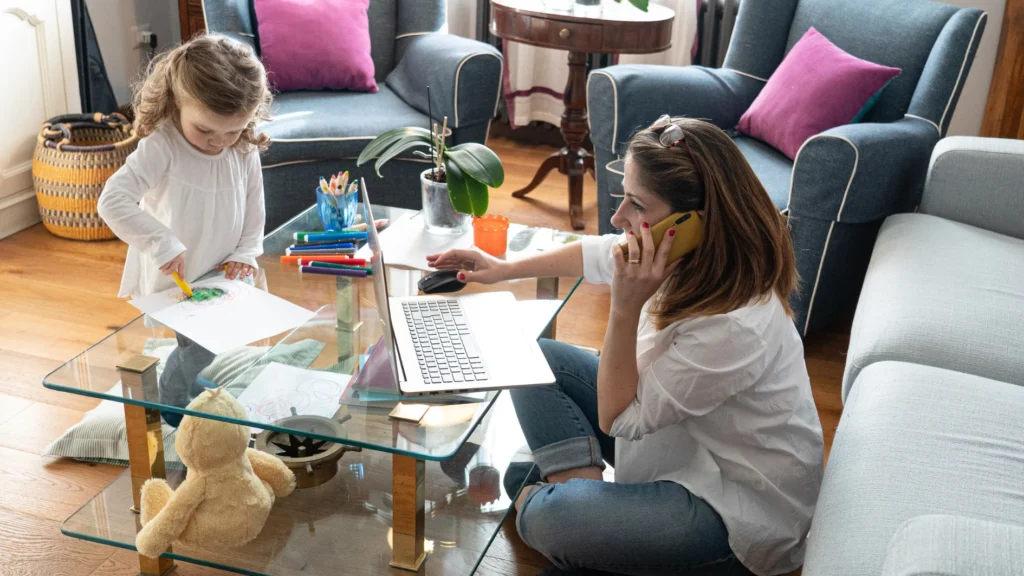
Work-life blending is a modern working model that combines professional and private life. It provides the opportunity to integrate work more flexibly into everyday life, taking individual life circumstances into account.
While this concept has many advantages, it also requires a high degree of self-organisation and mindfulness. In collaboration with KEEP BALANCE, I demonstrate how companies can effectively support this approach and empower their employees. #PaidCooperation
WORK LIFE BLENDING DEFINITION:
Work-life blending refers to the development whereby the boundaries between work, leisure and domestic activities are becoming increasingly blurred. Commuting, online meetings, sports, phone calls, hobbies and parenting can merge seamlessly or occur almost simultaneously.
Work-life blending is thus the opposite of the traditional „work-life separation“ model. (https://www.personio.de/hr-lexikon/work-life-blending/)
My personal experience: when everything happens at once
In the summer, like many working parents, I organised my child’s holiday activites. I had to plan nine weeks of camps, activities and time with friends. I planned everything carefully and was able to work well at the same time.
In August, an additional responsibility arose when a parent needed care. My son and I moved to the countryside, set up my home office and developed a plan to balance family life, household duties and my career. I took over the care of the parent, took care of the household, cooked, worked in the garden and completed professional tasks.
The strain quickly increased. I could feel my energy levels dropping and my emotional balance wavering. I reduced my work commitments and focused on the essentials: family and health. This decision restored stability.
However, after a week and a half, however, I was still feeling exhausted. A conversation with a colleague changed my perspective. She said, „You are present, you care for others and for yourself – that deserves recognition.“ This encouragement was empowering and provided new clarity.
Work-life blending: opportunities and challenges
Opportunities:
- individual organisation of working hours and location
- greater satisfaction through self-determination
- work-life balance
- attractiveness as an employer
Challenges:
- blurring boundaries between work and leisure
- high demands on self-organisation
- simultaneous responsibility in multiple roles
- emotional and physical strain
What companies can get involved
Work-life blending is particularly successful when companies create supportive conditions:
- clear structures and communication regarding working hours and availability
- sensitising managers to individual stress factors
- space for open discussions about personal challenges
- preventive measures such as coaching, workshops and reflection formats

My conclusion
Employees who juggle work, family life and caring responsibilities can benefit from professional support. An Employee Assistance Programme (EAP), such as the one offered by KEEP BALANCE, provides exactly a space: for confidential conversations, psychological counselling and practical support.
Beneficial conversations can open up new perspectives, boost confidence and activate personal strength.
With support that makes a difference, work-life blending becomes a sustainable model.
KEEP BALANCE is the relief organisation's Employee Assistance Programme (EAP). It offers comprehensive external employee counselling, guidance and support on a wide range of topics relating to work, family and other life challenges.
KEEP BALANCE offers, among other things, individual counselling by experts via telephone hotline, video calls or in person – at over 30 locations throughout Austria. For employers who care about the health and well-being of their employees.