
HR-Passonista | Marion Eppinger

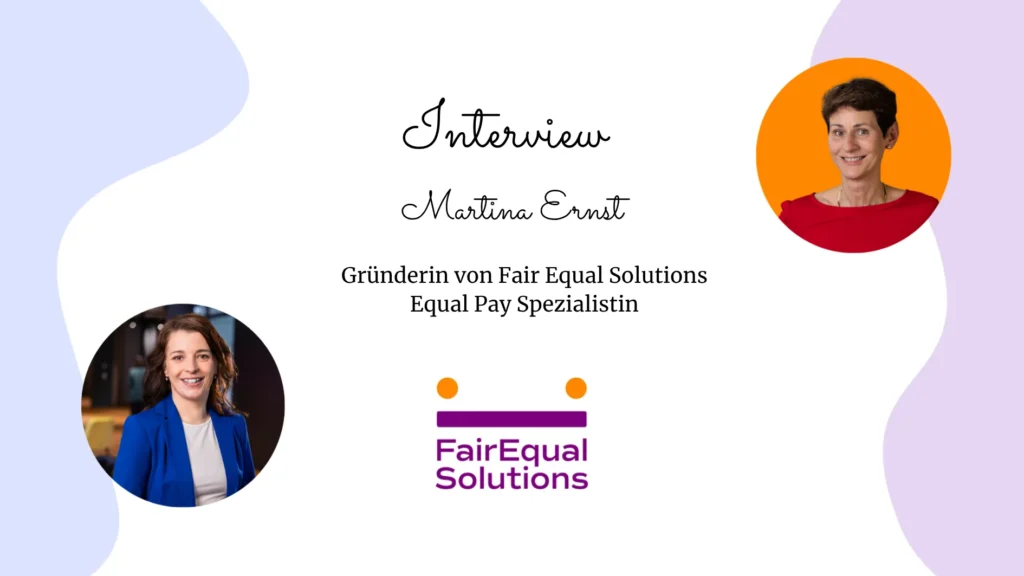
„Fair pay is much more than just salary“ – a conversation with Martina Ernst about the EU Pay Transparency Directive

Interview mit Martina Ernst über Fair Pay und die EU-Entgelttransparenzrichtlinie
The EU Pay Transparency Directive is set to come into force soon, fundamentally changing the rules of the game for companies. It’s about more than just numbers: it’s also about culture, trust, and strategic positioning. Those who act now will ensure compliance and enhance their appeal as employers.

As an HR strategist, I believe that the directive is not just a reporting issue, but rather a cultural stress test, as Martina would agree. That’s why I spoke to Martina Ernst, a leading expert in people and culture focusing on fair and equal pay, about the biggest challenges and opportunities, and how to achieve true fairness.

Martina, you have been helping companies to achieve fair pay for years. Many start with an Excel analysis, but you say that is not enough. Why is the cultural dimension so important?

Marion Eppinger

#HRPassionista

Runder organger Kreis mit Martina Ernst

Martina Ernst

People & Culture Profi

My advice: Don’t start with Excel, start with your culture. The guideline is not just a compliance project – it is a cultural stress test.

Companies must ask themselves honestly: how do we evaluate performance? What values do we live by? How do we deal with inequalities?

I am excited that you see the guidelines as a cultural project. Money has a huge impact on motivation and loyalty. Where should I begin if I start now?

Marion Eppinger

#HRPassionista

Runder organger Kreis mit Martina Ernst

Martina Ernst

People & Culture Profi

First, I need to involve all key stakeholders as early as possible, get them on board, and work with them to assess the current situation. We alos need to review the existing remuneration strategy to ensure that it aligns with the company’s values and employer value proposition.

Next, I will create a gender-neutral job architecture with clear salary ranges for each job level. Then, we need to analyse existing remuneration practices, including variable components and benefits. Finally, there will be communication and training. Employees want to understand how salaries are determined and what criteria apply to promotions, as well as how to have an objective dialogue about salaries.

Infobox: What is job architecture?

Job architecture involves the structured organisation of functions, occupational groups and career levels within a company. It creates internal comparability and promotes professional mobility. (Source: aon.com)

Consider total compensation,  i.e. all components of remuneration that go beyond the basic salary and bonuses, such as benefits, additional services and variable components. This is the basis for genuine comparability.

In my experience, job architecture is often underestimated in projects. It forms the basis for everything, particularly with regard to total compensation.

What do you see as the biggest challenge in implementing the directive?

Marion Eppinger

#HRPassionista

Runder organger Kreis mit Martina Ernst

Martina Ernst

People & Culture Profi

Going forward, the onus will be on the company to prove its case. This will fundamentally change the nature of discussions.

Managers will need to be able to argue objectively, which requires training. At the same time, salary is an emotional topic. It affects self-esteem and trust in the organisation. This is why we need a new language around salary – one that provides clarity without causing offence.

Communication is key. What should I do when salaries need to be adjusted because they are too low?


Marion Eppinger

#HRPassionista

Runder organger Kreis mit Martina Ernst

Martina Ernst

People & Culture Profi

It helps to look at the comparison group within the company to see if there are any differences in terms of responsibility, skill level, working conditions, workload, performance and seniority. It is also worth looking at the market, of course, because you don’t want to lose the person.


But what if someone earns significantly more?


Marion Eppinger

#HRPassionista

Runder organger Kreis mit Martina Ernst

Martina Ernst

People & Culture Profi

This can arise from seniority based on collective agreements, which is a feature that does not exist in other countries.

It is important that companies can able to explain such differences. Transparency does not mean egalitarianism, rather, it means having comprehensible criteria.


What steps would you recommend that companies take in order communicate salaries transparently?


Marion Eppinger

#HRPassionista

Runder organger Kreis mit Martina Ernst

Martina Ernst

People & Culture Profi

I recommend a structured five-phase approach:

  1. Preparation & alignment: This involves stakeholders, clarifying the target vision, setting up a project team, reviewing the employee value proposition (employer promise) and compensation philosophy.
  2. Analysis & roadmap: Develop job architecture and salary bands and prepare a gender pay gap report.
  3. Information & communication: Inform employees and managers about the goals, measures and timetable.
  4. Participation & training: Dialogue formats and training on unconscious bias and performance criteria.
  5. Implementation & anchoring: Integration into HR processes, monitoring and feedback loops.


This approach provides a clear framework that certainly helps with implementation.

But what are the most common pitfalls?


Marion Eppinger

#HRPassionista

Runder organger Kreis mit Martina Ernst

Martina Ernst

People & Culture Profi

A purely technocratic approach that lacks cultural context. Or contradictory communication that creates uncertainty. Providing too much information can also be overwhelming.

Therefore: clear language and consistent messages are needed as well as room for emotions.

I understand that this can be a challenging part of the process. But as with everything in life, every situation has two sides. So let’s focus on the positive aspects. What opportunities does this process offer?


Marion Eppinger

#HRPassionista

Runder organger Kreis mit Martina Ernst

Martina Ernst

People & Culture Profi

Transparency strengthens trust and fairness as well as making employer more attractive. It promotes commitment, reduces staff turnover, and ensures that organisations are fit for the future. Embracing change not only provides regulatory certainty, but also attracts talent.


Thank you for your insights into achieving  open and fair salary transparency. There is certainly a lot to consider, but as you rightly pointed out at the outset, this is a genuine opportunity to establish yourself as an attractive employer.

What is your conclusion?


Marion Eppinger

#HRPassionista

Runder organger Kreis mit Martina Ernst

Martina Ernst

People & Culture Profi

As you said, fair pay is much more than just money. It’s an attitude. The EU directive is a wake-up call, promoting you to take a look at your own remuneration culture. Those who approach the issue strategically and empathetically will achieve genuine fairness and build a strong employer brand.


About Martina Ernst:

Martina Ernst is a people and culture professional and entrepreneur who focuses on #FairEqualPay. She is also academic director of the People & Culture Management programme at the WU Executive Academy. Drawing on her international experience as a human resources manager, managing director and chair of the supervisory board, she helps professionals and companies achieve fair and equal pay that aligns with their corporate culture through her company FairEqualSolutions.


My conclusion

As an HR Strategist, my perspective is:

From my experience of providing strategic HR consultancy services, I have observed that companies that define a clear remuneration philosophy early on and integrate it into their HR strategy are not only compliant with regulations, but also strengthen their employer brand.
The directive is an opportunity to transform HR from an administrative burden into a genuine business partner.

Are you ready for the EU Pay Transparency Directive?
Time is running out – now is the moment to put your remuneration strategy and corporate culture to the test.

👉 Arrange a free initial consultation

Together, we will develop a roadmap to ensure compliance and strengthen your employer attractiveness.

Bild von Marion Eppinger ist die #hrpassionista

Marion Eppinger ist die #hrpassionista

Sie ist Influencerin für Trends im HR-Bereich. Richtungsweisend und agil für Top-Themen der Branche.

Du möchtest mehr über dieses Thema erfahren?

Dann trau dich und schreib mir gerne. Wir können ein kostenloses Erstgespräch von maximal 30 Minuten vereinbaren, um gemeinsam etwas tiefer in die Materie einzutauchen.

Connect with the #HrPassionista

Du möchtest mehr über
#whatstrendinginHR wissen?