According to Sage’s study, „HR in Transition – Outlook for 2024,“ 94% of surveyed HR managers suffer from high workloads and stress.
Administrative tasks still dominate everyday life, preventing many from providing strategic support to companies.
To address this issue, digitalisation in HR departments must be promoted and artificial intelligence (AI) must be utilised for support. This would enable HR departments to optimise their processes and free up resources, allowing HR managers to focus on making companies more competitive.
In order to use AI efficiently in HR management, it is important to understand what AI systems are available, what can legally done with them, and in which areas they can be used. The is an extensive and complex topic, which is why I will provide you a brief overview in my blog article.
Data is crucial
A solid database is essential for artificial intelligence (AI) to be used efficiently and tailored to specific needs. This database itself and the information that can be fed into AI are crucial for selecting the right AI system.
What is the difference between AI, machine learning and deep learning?
To establish AI in a company, three different systems must be distinguished. Firstly, you need to decide what you want to achieve with AI and where it can be used in your company.
Let’s take a look at the possibilities:
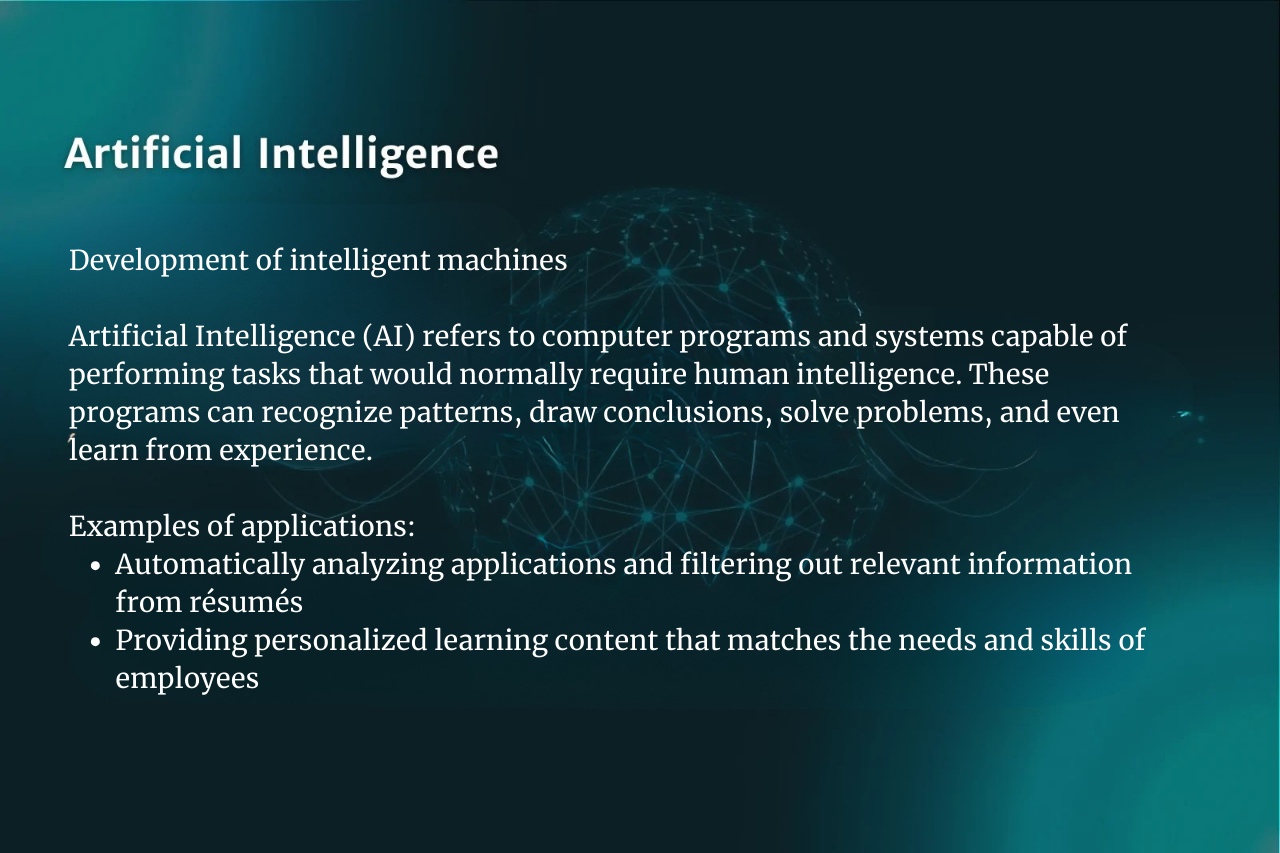
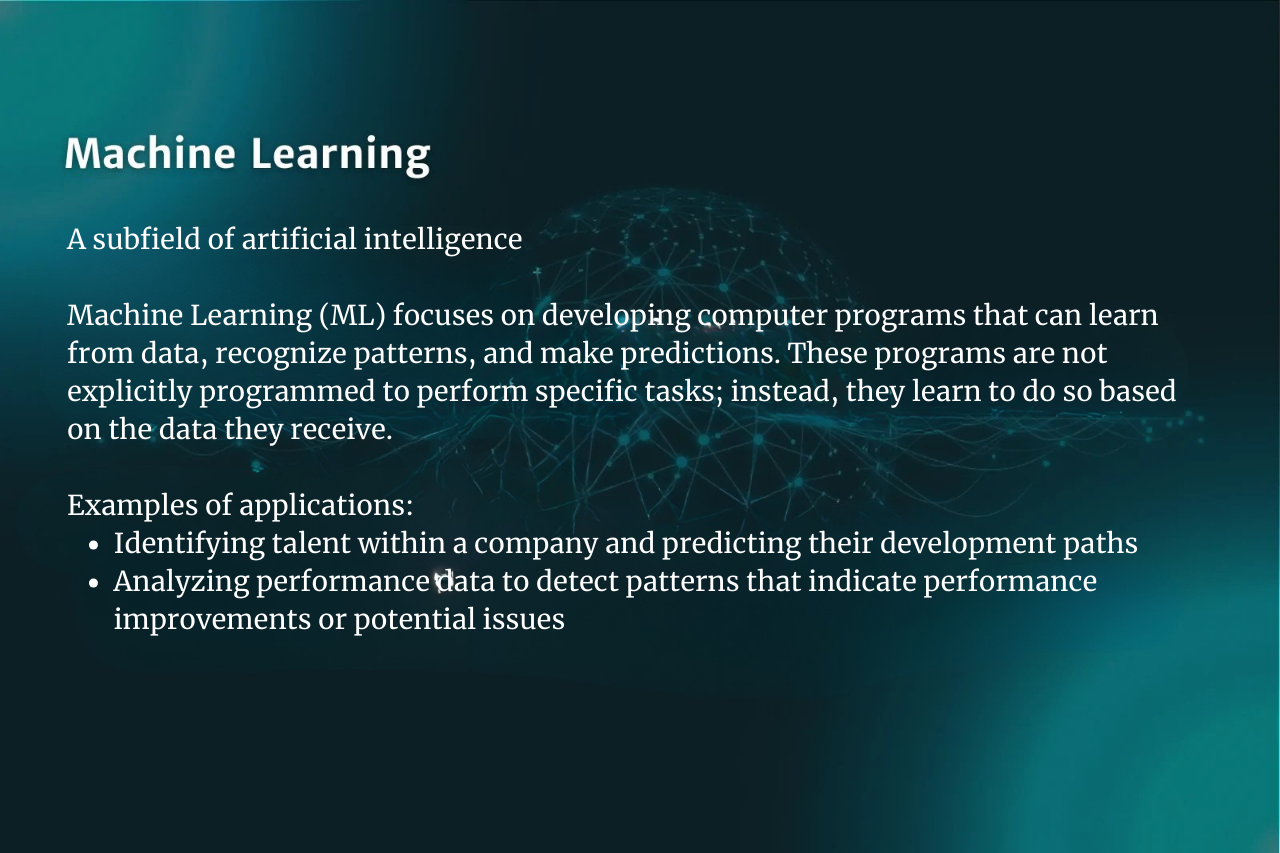
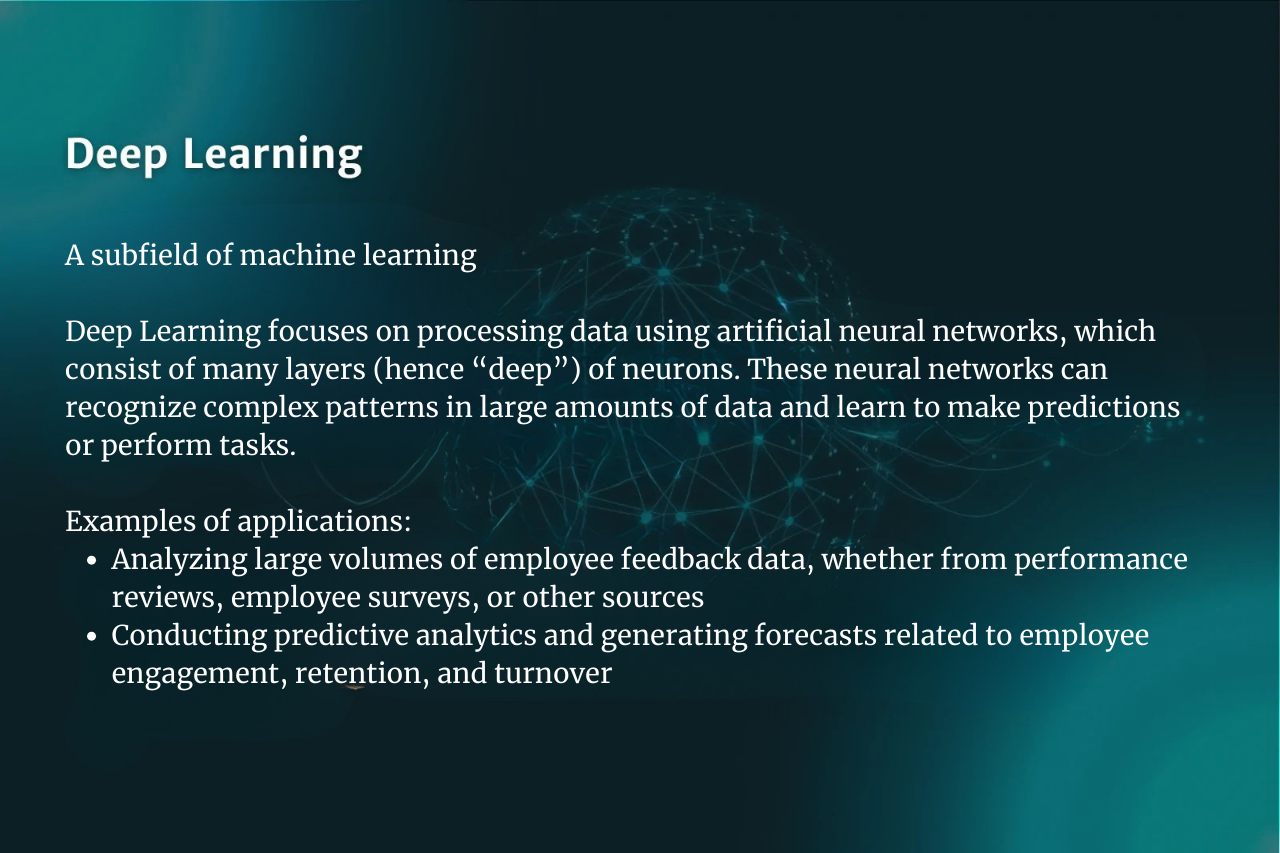
When implementing AI in a company, three different systems are generally distinguished. First and foremost, you need to decide what you want to achieve with AI and how it can be used within your company.
Let’s take a look at the possibilities:
Despite all the hype surrounding AI, it is important to remember that these systems learn from us humans. AI learns from our behaviour, so as long as social inequalities exist, it learns to take them into account and include them in its evaluation criteria. This has already been demonstrated in several cases, e.g. Amazon’s facial recognition system or at AMS, where AI has discriminated deliberately. It is important to be aware of this and to minimise the amount of bias passed on to AI.
The use of AI and legal regulations
Some AI systems have the potential to significantly reduce the workload of HR managers and transform HR management. However, as with all technologies, however, there are concerns about data protection. The EU has therefore developed a uniform directive, known as the AI Act. These guidelines will soon come into force shortly and will determine how AI can be used in the future.
The AI Act takes a risk-based approach: whereby different regulatory and monitoring requirements apply to AI systems depending on their intended use and the associated risks. As I mentioned in my previous example, AI systems differ in terms of their functionality and the extent to which they (can) influence or even take over decision-making processes. This is why it is important to distinguish between them in legislation.
For instance, deep learning – i.e. predictive analysis to use to forecast employee retention and turnover – is widely used in North America, but not yet legally permitted in Austria.
Even though the details of the AI Act are not known, this should not stops us from exploring the possibilities and opportunities that AI offers. This way, once everything has been clarified legally and made public, we can focus on our own requirements in detail and ensure that we do not miss out.
Areas of application in HR management
In Europe, AI is currently most commonly used in the area of recruitment:
- writing job descriptions
- placing job advertisements on social media and career websites
- comparing application letters
- conducting and analysing application videos
- test procedures (assessments)
Why is this the case? Demographic change and the shortage of skilled workers mean that new recruitment methods are required. Using AI in recruitment is transforming the application process for many companies. Artificial intelligence greatly reduces the workload of HR departments, thereby optimising the selection process.
- Increased efficiency: AI can automate and speed up the recruitment process. It can analyse large volumes of of applications and filter out the most suitable candidates, significantly reducing the time HR managers spend on the process.
- Better candidate matching: using AI algorithms enable HR departments to match candidate profiles more effectively with job requirements.
- Improving candidate outreach: Just as companies expect job applications to be tailored to their job advertisement, AI can now tailor job advertisements to individual potential applicants. AI-supported systems can thus enable personalised communication by analysing applicant profiles and providing relevant messages or job offers.
- Analytical insights: AI can collect and analyse extensive data on the recruitment process. This gives companies an in-depth understanding of trends, success factors and areas for improvement.
However, recruitment is just one area among many. In addition to personnel administration, where processes such as onboarding materials and employee surveys can be automated, personnel development is another exciting area. AI will transofrm some aspects of our learning behaviour. For example, it can be used for presentation training. Based on specified criteria, it gives you personalised feedback on your presentation, on aspects such as on your voice, word repetitions, volume, etc., and makes specific suggestions on how you can improve. Very exciting!
In short, AI can support almost all HR processes. In the future, HR departments will have to work in an increasingly data-driven manner – the keyword here is: people analytics. This opens up new opportunities for us to analyse data and use it effectively with the help of AI and make even better objective decisions.

My conclusion
The question is no longer whether to use AI, but which digitalisation strategy to pursue and in which areas of the company AI can be used effectively. AI can only work well if there is relevant data is available to feed it. The legal framework for this is still difficult to assess, but only time will tell where the journey is headed. It is important to note that no amount of AI will ever replace the human perspective; rather, the focus should be on supporting each other and optimising processes.
The information in this blog post comes from the „AI in HR Management“ seminar at the ARS Academy, which provides a solid foundation for exploring this topic of AI and offers a good overview of the subject.
Many thanks to the speakers, Lukas Hutter, Alexander Zojer, Andreas Tinhofer and Martin Bernardi. Further information and seminar dates can be found at AI in HR Management.